How Does a Butterfly Valve Function in Industrial Pipelines? | GEKO Valve
Sep 20, 2026
In modern industrial piping systems, stable flow control, space-saving installation, and cost-efficient operation are essential for long-term production reliability. As one of the most widely used quarter-turn valves, the butterfly valve plays a critical role in industrial fluid handling. Unlike ball valves for heavy-duty high-pressure isolation or gate valves for full straight-flow service, butterfly valves feature unique structural and functional advantages tailored for large-diameter industrial pipelines, circulating systems, and frequent flow regulation. This article focuses on how butterfly valves function in real industrial pipeline applications, including core operating functions, pipeline coordination logic, functional differences between various types, and industrial application value.
1. Core Functional Roles of Butterfly Valves in Industrial Pipelines
Butterfly valves undertake three major functional tasks in industrial piping: pipeline isolation, continuous flow throttling, and pipeline system protection. These three functions support the stable operation of water treatment, HVAC, chemical, power, and environmental protection industrial systems.
1.1 Pipeline Isolation Function
The most basic industrial function of a butterfly valve is system isolation. During equipment maintenance, pipeline segment overhaul, or emergency shutdown, the butterfly valve completely cuts off fluid flow by rotating the disc to a fully closed position. Industrial-grade soft-seated and metal-seated butterfly valves provide reliable shutoff performance, effectively isolating upstream and downstream media to ensure safe maintenance and prevent medium backflow. This function is widely used for main pipeline isolation and branch pipeline independent control in large industrial piping networks.
1.2 Precise Flow Throttling & Regulation
Different from gate valves that only support full open or full close status, butterfly valves excel at industrial flow regulation. By adjusting the opening angle of the butterfly disc (from 0° to 90°), operators can precisely control pipeline flow rate, medium velocity, and system pressure. This adjustable function makes butterfly valves ideal for industrial circulating water systems, chemical fluid delivery, and ventilation flue gas pipelines that require stable and continuous flow adjustment.、
1.3 Pressure Stabilization and System Protection
In circulating industrial pipelines, sudden flow surges often cause system pressure fluctuations. The flexible opening adjustment of butterfly valves can buffer instantaneous pressure impact, balance pipeline system pressure, and avoid equipment damage caused by excessive pressure difference. For large-diameter industrial circulating systems, butterfly valves effectively stabilize fluid operation and improve the overall safety coefficient of the pipeline network.
2. How Different Butterfly Valve Designs Perform in Industrial Pipelines
Different structural types of butterfly valves have differentiated functional positioning in industrial scenarios, which determines their applicable pipeline working conditions:
2.1 Concentric Butterfly Valves for General Industrial Circulation
Concentric butterfly valves feature a central disc and stem structure with simple operation and low cost. They are mainly used for conventional industrial pipelines with low pressure and normal temperature, undertaking daily isolation and basic flow regulation tasks for water, air, and non-corrosive media.
2.2 Double & Triple Offset Butterfly Valves for Heavy-Duty Industrial Service
Double offset and triple offset butterfly valves eliminate disc and seat friction during rotation, greatly improving sealing durability and high-pressure resistance. In high-temperature steam, corrosive chemical, and high-pressure industrial pipelines, offset butterfly valves achieve long-cycle stable operation, solving the problem of easy wear and leakage of ordinary concentric valves under harsh industrial conditions.
2.3 Wafer and Lug Type Pipeline Installation Functions
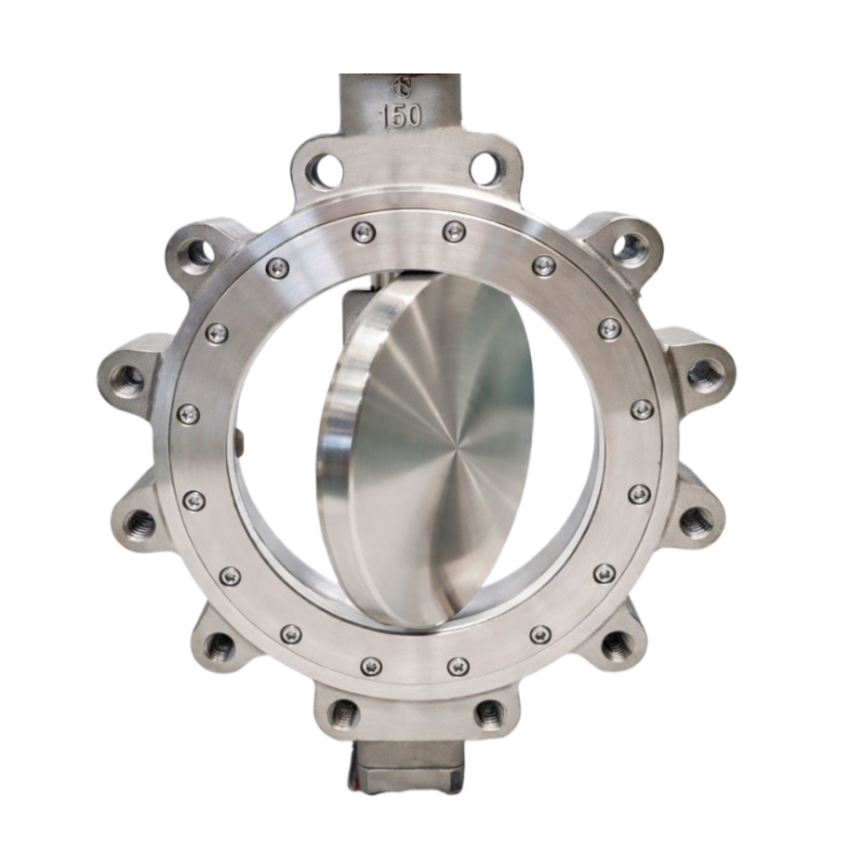
Wafer butterfly valves are clamped between pipe flanges with ultra-thin body, saving installation space and suitable for compact industrial skid-mounted pipeline systems. Lug butterfly valves with threaded lugs support unilateral pipeline disassembly, enabling independent maintenance of single pipeline sections without shutting down the entire system, which greatly improves industrial operation efficiency.
3. Actuation Modes and Their Industrial Functional Differences
The operating mode directly determines the valve’s automation function in industrial pipeline systems:
Manual Butterfly Valve: Adopts lever or gear operation, suitable for low-frequency switching industrial pipelines, realizing on-site manual isolation and simple adjustment with low maintenance cost.
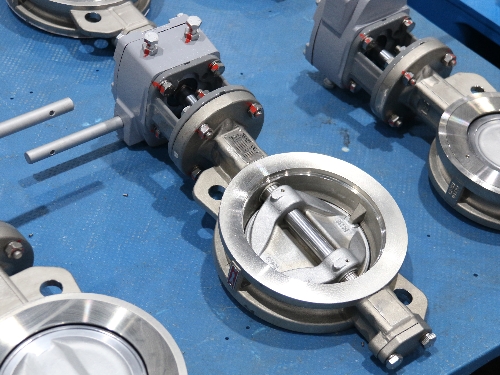
Pneumatic Butterfly Valve: Driven by pneumatic actuators, featuring fast response and explosion-proof performance, suitable for chemical, petrochemical and flammable medium industrial pipelines for automatic emergency cut-off and flow control.
Electric Butterfly Valve: Supports remote signal control, proportional regulation and system linkage, perfectly matching PLC and SCADA industrial intelligent pipeline systems, realizing unmanned automatic flow management.
4. Unique Industrial Pipeline Advantages of Butterfly Valves
Compared with other industrial valves, butterfly valves have irreplaceable functional advantages in large-scale industrial piping networks:
Super lightweight and compact structure, reducing pipeline load and engineering installation cost
Fast quarter-turn operation, improving pipeline response speed and emergency handling efficiency
Excellent large-diameter pipeline adaptability, with obvious cost advantages over ball valves and gate valves
Dual functions of isolation and regulation, meeting diverse industrial pipeline control demands
Few internal wearing parts, stable long-term operation and low industrial maintenance frequency
5. Industrial Application Scenarios Based on Pipeline Functions
Water & Wastewater Industrial Pipelines: Butterfly valves undertake flow regulation and pipeline isolation for raw water, purified water and sewage treatment systems.
HVAC & Central Circulating Systems: Adjust chilled water and hot water circulation flow to stabilize building and factory temperature control systems.
Chemical & Petrochemical Pipelines: Offset metal-seated butterfly valves control corrosive media and high-temperature process fluids.
Power Plant Industrial Pipelines: Used for cooling water circulation, flue gas exhaust and auxiliary system isolation.
Fire Protection Industrial Pipelines: Provide rapid emergency cut-off and flow control for fire water systems.
6. GEKO Valve Industrial-Grade Butterfly Valve Solutions
GEKO Valve provides full-series industrial butterfly valves optimized for complex pipeline operating environments, including concentric and triple offset butterfly valves, wafer and lug type installation styles, soft-sealed and metal-sealed structural configurations, as well as complete pneumatic and electric automated valve packages. All products are strictly manufactured according to industrial standards, with stable regulation performance and reliable sealing capacity, ensuring safe, efficient and long-term operation of various industrial pipeline systems.
9 Core SEO Keywords: Triple Offset Butterfly Valve, Double Offset Butterfly Valve, Industrial Wafer Butterfly Valve, Lug Type Butterfly Valve, Industrial Flow Control Butterfly Valve, Pneumatic Industrial Butterfly Valve, Electric Regulating Butterfly Valve, Heavy Duty Butterfly Valve, Pipeline Isolation Butterfly Valve
MEHR LESEN






 E-Mail
: info@geko-union.com
E-Mail
: info@geko-union.com
 E-Mail
: info@geko-valves.de
E-Mail
: info@geko-valves.de
 E-Mail
: tw@geko-union.com
E-Mail
: tw@geko-union.com
 E-Mail
: nl@geko-union.com
E-Mail
: nl@geko-union.com



 IPv6-Netzwerk unterstützt