


WONACH SUCHST DU?
GEKO Kugelrückschlagventil mit Gummiauskleidung – Korrosionsbeständigkeitstechnologie und Verarbeitung erklärt
Die PTFE-ausgekleideten Kugelrückschlagventile von GEKO sind für anspruchsvolle Anwendungen in korrosiven Umgebungen konzipiert. Durch die Kombination von fortschrittlichem Konstruktionsdesign, PTFE-Auskleidungstechnologie, der Integration der Legierung N04400 (Monel 400) sowie strengen Entfettungs- und Reinraum-Montageprozessen bietet GEKO eine hochzuverlässige und langlebige Lösung für die Chemie-, Pharma-, Halbleiter- und Schifffahrtsindustrie.
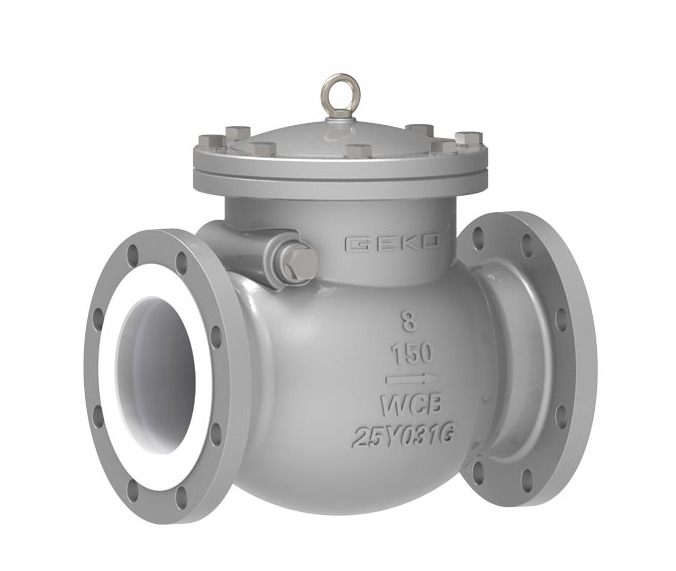
1. Kerntechnologien für die Tragwerksplanung (GEKO Innovatives Design)
Design mit schwebender Kugel
GEKO verwendet eine schwimmende Kugelkonstruktion mit vollem Bohrungsdurchmesser. Unter Mediendruck bewegt sich die Kugel automatisch zum Auslasssitz und gewährleistet so eine Einwegabdichtung. Diese durch strömungsmechanische Analysen optimierte Konstruktion reduziert Turbulenzen deutlich und eignet sich für niedrige bis mittlere Druckbedingungen. Sie ist besonders geeignet für die effiziente Fluidsteuerung in chemischen und pharmazeutischen Prozessen.
Dreifach-Dichtungssystem (GEKO-eigene Technologie)
Primärdichtung
Die PTFE-Auskleidung wird formgepresst und umschließt die Innenwand des Ventilkörpers sowie die Sitzfläche vollständig. Dadurch entsteht eine durchgehende, nahtlose Korrosionsschutzbarriere. Das Präzisionsformverfahren von GEKO gewährleistet eine gleichmäßige Auskleidungsdicke und eliminiert effektiv das Risiko lokaler Korrosion.
Sekundärdichtung
Ein elastischer PTFE-Sitz mit Lippe sorgt für Selbstkompensation und passt sich bei Druckänderungen automatisch der Kugeloberfläche an. GEKO verwendet eine speziell entwickelte PTFE-Mischung, um Verschleißfestigkeit und chemische Stabilität zu verbessern.
Verpackungsdichtung
Im Spindeldichtungsbereich werden PTFE-Dichtungssätze in Chevron-Form eingesetzt, um ein Austreten von Fördermedium entlang der Spindel zu verhindern. In Kombination mit einem Abstreiferring entfernt die GEKO-Dichtungskonstruktion effektiv Restmedien und verbessert so die Dichtheitszuverlässigkeit zusätzlich.
Integralgussstruktur
Kugel und Schaft werden als einteiliges Gussteil gefertigt, wodurch Spannungsspitzen und Leckagerisiken, die bei herkömmlichen Gewindeverbindungen auftreten können, vermieden werden. Die hochfeste Legierung N04400 gewährleistet die strukturelle Integrität unter Hochdruckbedingungen.
2. Kombinierte Verarbeitung von PTFE-Auskleidung und N04400 (GEKO-Fertigungsstandards)
Kompressionsform- und Verkapselungstechnologie
GEKO verwendet das Hochdruck-Isostatik-Formverfahren, bei dem hochreines PTFE-Pulver in den Ventilhohlraum N04400 eingebracht und unter hoher Temperatur (≈370 °C) und hohem Druck (10–20 MPa) geformt wird. Dieses Verfahren erzeugt sowohl eine mechanische Verzahnung als auch eine molekulare Grenzflächenbindung zwischen PTFE und dem Metallsubstrat und gewährleistet so die Beständigkeit gegenüber Temperaturwechseln und chemischen Einflüssen.
Oberflächenvorbehandlung
Die Innenfläche der N04400-Komponenten wird einem von GEKO entwickelten Sandstrahlverfahren (Ra ≤ 1,6 µm) unterzogen, um die mikroskopische Rauheit zu erhöhen und die PTFE-Haftung zu verbessern. Nach der Vorbehandlung durchlaufen die Ventilkörper Reinheitsprüfungen von GEKO, um die Abwesenheit von Restverunreinigungen sicherzustellen.
Metallfreies Medienkontaktdesign
Alle medienberührten Dichtflächen sind vollständig mit PTFE beschichtet, wodurch das Substrat N04400 vollständig vor korrosiven Flüssigkeiten isoliert wird. Das synergistische Schutzkonzept „Metallgerüst + Polymerschutz“ von GEKO verlängert die Lebensdauer des Ventils deutlich.
3. Entfettungsstandards & Reiner Montageprozess (GEKO Clean Control)
| Prozessschritt | GEKO-Methode | Parameteranforderungen | Standardreferenz |
|---|---|---|---|
| Vorreinigung | Tauchreinigung | 60 ± 5 °C, industrielles Aceton oder Trichlorethylen, Einweichzeit ≥ 60 min | GB/T 19276-2003 |
| Feinreinigung | Wischmethode | Fusselfreies Entfettungstuch + analytischer Alkohol (≥ 99,7 %), in eine Richtung wischen, bis ölfrei | ISO 15848-1 |
| Abschließende Trocknung | Stickstoffspülung | Hochreiner N₂ (O₂ ≤ 5 ppm), 0,2–0,5 MPa, ≥ 3 min | GMP Anhang 1 |
| Umweltkontrolle | Saubere Montage | Reinraum der Klasse 1000, die Mitarbeiter tragen Reinraumanzüge und puderfreie Handschuhe. | ISO 14644-1 |
Wichtige Kontrollpunkte
GEKO verbietet phosphorhaltige Reinigungsmittel, um eine Kontamination der PTFE-Oberfläche zu verhindern.
Alle Montagewerkzeuge sind GEKO-zertifiziert und entfettet, um eine Sekundärkontamination zu vermeiden.
Die fertigen Ventile durchlaufen den GEKO-Reinheitstest, gefolgt von einer Stickstoffspülung und Vakuumverpackung, um die Aufnahme von Feuchtigkeit oder Ölnebel zu verhindern.
4. Anwendbare Normen und Zertifizierungen (GEKO-Konformität)
Materialnormen
N04400 entspricht ASTM B564 / UNS N04400
PTFE entspricht ASTM D4894
Alle Materialien werden von unabhängigen Laboren geprüft, um die chemische Zusammensetzung und die mechanischen Eigenschaften sicherzustellen.
Ventilnormen
Druckprüfung: Die Prüfungen wurden gemäß API 598 für Gehäuse- und Sitzdichtheitsprüfungen durchgeführt (zulässige Leckage ≤ 0,1 ppm). GEKO-Ventile gewährleisten absolute Dichtheit auch unter extremen Druckbedingungen.
Designspezifikation: Die Ventilkörperkonstruktion entspricht den Druck-Temperatur-Anforderungen gemäß ASME B16.34 für Metallventile. GEKO-Konstruktionen werden mittels Finite-Elemente-Analyse (FEA) validiert, um die strukturelle Sicherheit zu gewährleisten.
Reinheitszertifizierung: Für Anwendungen im pharmazeutischen und lebensmittelrelevanten Bereich durchlaufen GEKO-Ventile eine Validierung nach Reinraumverfahren gemäß EHEDG- oder 3-A-Standards und erfüllen somit die GMP-Anforderungen.
Besonderer Hinweis
Obwohl es sich bei der Konfiguration N04400 + PTFE-Kugelrückschlagventil um eine nicht standardmäßige, kundenspezifische Lösung handelt, erfüllt ihre technische Konstruktion die höchsten Anforderungen an Material, Abdichtung und Reinheit gemäß den oben genannten Normen und repräsentiert damit ein branchenführendes Niveau.
5. Typische Anwendungen und technische Vorteile (GEKO-Anwendungsfälle)
| Industrie | Medienbeispiele | GEKO – Technische Vorteile |
|---|---|---|
| Chemische | Konzentrierte Schwefelsäure, Fluorwasserstoffsäure, Chlor | PTFE ist äußerst korrosionsbeständig; N04400 verhindert Spannungsrisskorrosion. GEKO-Ventile arbeiten seit 3 Jahren leckagefrei in einem großen Chemiepark. |
| Pharmazeutische | Sterile Prozessflüssigkeiten, Ethanol, Aceton | GMP-konforme Entfettung und Reinheit, keine Partikelabgabe. GEKO-Ventile haben die FDA-Vor-Ort-Audits bestanden. |
| Schiffsmaschinenbau | Meerwasser, Salzsprühumgebungen | Ausgezeichnete Chloridbeständigkeit von N04400. GEKO-Ventile haben 5 Jahre Offshore-Salzsprühtests standgehalten. |
| Halbleiter | Hochreine Säuren, Lösungsmittel in Elektronikqualität | Keine Auslaugung von Metallionen; erfüllt die Reinheitsanforderungen von 10⁻⁹. GEKO-Ventile sind von Halbleiteranlagenherstellern zugelassen. |
6. Aktuelle technische Herausforderungen und Entwicklungstrends (GEKO-Innovationsfahrplan)
Herausforderungen
PTFE weist einen deutlich höheren Wärmeausdehnungskoeffizienten als N04400 auf; langfristige Temperaturwechsel können zu Mikrorissen an der Grenzfläche führen. GEKO begegnet diesem Problem durch Gradienten-Pressformverfahren und hat Dichtungsringe zur Kompensation der Wärmeausdehnung entwickelt.
Bei hohem Differenzdruck kann es zu Kugelschwingungen kommen. GEKO optimiert die Strömungswege und führt Leitkegelstrukturen ein, um die Auswirkungen von Turbulenzen zu reduzieren.
Trends
Intelligente Überwachungsintegration: GEKO integriert Mikrokorrosionssensoren in den Ventilkörper, um den PTFE-Verschleiß und Änderungen des Oberflächenpotenzials von N04400 in Echtzeit zu überwachen und so eine vorausschauende Wartung zu ermöglichen.
Verbundauskleidungen: Zweilagige PTFE- und PFA-Strukturen erhöhen die Temperaturbeständigkeit auf bis zu 350 °C und erweitern so den Einsatz in Hochtemperatur-Säurebeizsystemen. Die Verbundauskleidungstechnologie von GEKO ist durch mehrere Patente geschützt.
3D-gedruckte Ventilkörper: Komplexe Strömungswege aus N04400 werden mittels selektivem Laserschmelzen (SLM) gefertigt. Dadurch lassen sich leichte Bauformen und integrierte Innenräume realisieren. Die 3D-gedruckten Ventile von GEKO haben die Druckprüfung bestanden.
GEKO Markenwert
Technologische Führungsrolle: Eigene Formgebungsverfahren und Reinraumkontrollsysteme gewährleisten Zuverlässigkeit auch unter extremen Betriebsbedingungen.
Branchenspezifische Anpassung: Maßgeschneiderte Lösungen für die Chemie-, Pharma-, Halbleiter- und andere Spezialbranchen.
Compliance-Sicherung: Die strikte Einhaltung internationaler Standards und anerkannter Zertifizierungen reduziert die Compliance-Risiken unserer Kunden.

 E-Mail
: info@geko-union.com
E-Mail
: info@geko-union.com
 E-Mail
: info@geko-valves.de
E-Mail
: info@geko-valves.de
 E-Mail
: tw@geko-union.com
E-Mail
: tw@geko-union.com
 E-Mail
: nl@geko-union.com
E-Mail
: nl@geko-union.com



 IPv6-Netzwerk unterstützt